When your child compiles a college list, you’ll discover that the cost analysis sheet contains many line items. Besides tuition, room and board will almost always climb to the top of the expense list.
But what is the meaning of room and board? Put simply, it’s a fancy term for “food” and “shelter.”
In this article, we’ll look at room and board meaning, what these costs include, the differences between various types of colleges, and how to distinguish between types of room and board. We’ll also help you put together a plan to pay for it. Read on to learn how room and board costs factor into a college education so both you and your child know what to expect.
Understanding Room and Board in College
What does room and board mean, or more specifically, what does room and board mean in college?
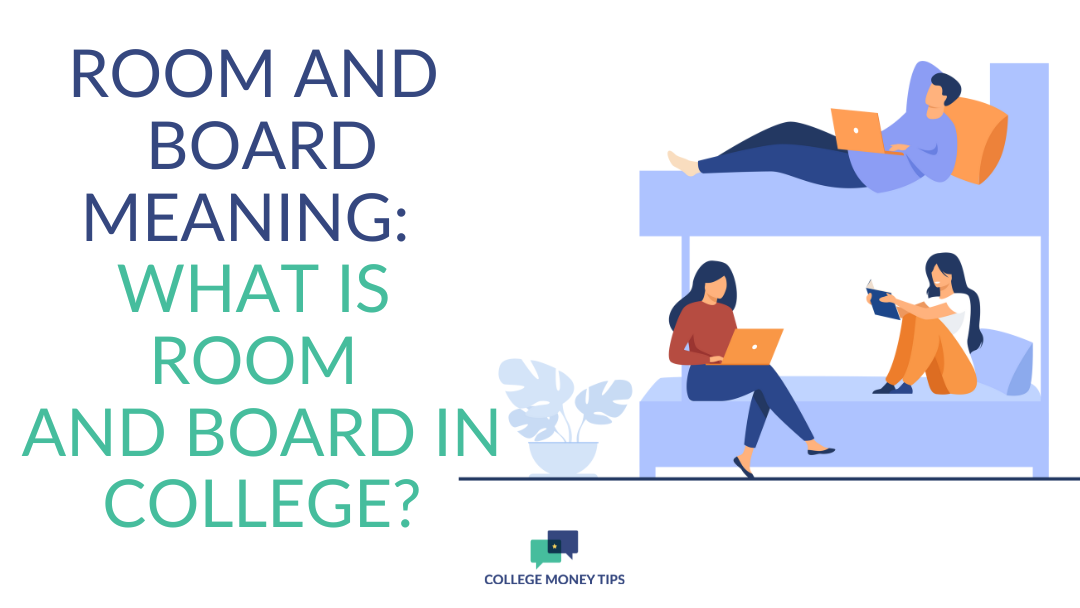
“Room and board” means living accommodations and dining services. “Room” is defined as the physical area and “board” is food. These necessities help students achieve the basics — food and shelter, which is vital for learners’ comfort and an optimal learning environment.
Defining “Room” in Room and Board
Colleges provide many options for where students may live, including typical dormitory-style living and living in apartment-like structures. They all differ in terms of price and services offered.
Some common types of housing options include:
Dormitory rooms: The most usual choice of accommodation, rooms in the dormitories usually have a bed, a desk, and perhaps drawers or a closet. They may have several rooms grouped together with a bathroom or two or more bathrooms on every floor.
Suite-style rooms: Suite-style rooms are more private and may cost more. Suite-style rooms typically contain a small lobby and bathrooms located within each suite.
Apartment-style housing: Colleges may include apartment-style housing equipped with a kitchen, dining hall and private bathrooms. This option provides more freedom since students may cook if they want. This housing type may also cost more.
In dorms, students likely have the option to live in a single room (private occupancy) or multiple occupancy in a single room (two people). Many schools also have triple or quad rooms, which usually costs less. Most schools provide beds, desks, closet space and shelving for single rooms, double rooms, triple and quad rooms.
Defining “Board” in Room and Board
What does board mean in room and board?
The “board” part of room and board relates to meal services, or college campus meal plans. Meal plans offer a fixed number of meals in a week, typically in an all-you-can-eat format. These plans offer more choices and ensure that learners have plenty of options, including dietary-friendly options.
Most meal plans are designed to suit different student lifestyles and budgets. Common types include unlimited plans, which allow for unrestricted access to dining halls; block plans, which offer a set number of meals per semester (such as 75 meals or so), and weekly plans (which provide a specific number of meals per week (such as 14 meals).
Each meal at a dining hall usually requires a “meal swipe.” Some plans allow swipes to be used at on-campus retail locations for a set dollar amount (e.g., $7 for a sandwich and drink).
Some schools add in “dining dollars” or “flex bucks”: additional funds included with many meal plans or purchased separately. They work like a debit system for snacks, coffee or meals at campus cafes and convenience stores. Unlike swipes, dining dollars often roll over semester to semester (but may expire at the end of the academic year).
Some plans partner with off-campus restaurants, letting students use swipes or dining dollars at select locations. Delivery or take-out options may also be included, depending on the school. Many plans also include guest passes.
Students can choose from various eating locations, including:
Dining halls: Dining halls are typically the most common for individuals, usually associated with a buffet concept. Swipes can typically be used during designated meal times for buffet-style or pre-set menus.
Campus cafes and eateries: Other traditional meal plans may allow for credits at other eating establishments on campus such as coffee houses and snack bars to improve the range of foods available to students.
The number of choices ranges greatly depending on the size of the school: bigger schools typically have more varied cafeterias as well as more varied menus.
Why Room and Board Are Important Components of College Costs
Food and shelter offer students the ability to have their basic needs met, with the ability to focus on studying and co-curricular activities, especially for first-time college students who learn to navigate college and be close to classes, libraries and other studying resources.
More importantly, residing in dormitories is convenient as it encourages social life. The student housing policy lets students engage lifestyles, share properties, and make friends more freely as compared to off-campus residents. Room and board aid those aspects of college: academic and social/personal.
However, room and board fees are a little broader than just a room, plus three meals a day. They also include a line of other services and facilities:
Utilities (electricity, water, heating, air conditioning)
Wi-Fi and internet access
Shared or private bathrooms
Laundry facilities
On-site security and/or keycard access
Maintenance and repair services
Common areas (lounges, study rooms, recreational spaces)
Kitchen or kitchenette access
Mail and package delivery services
Campus meal plan options
Access to fitness centers or recreational facilities
Cable TV or streaming services (sometimes included)
Parking (may require additional payment)
Resident advisor (RA) support and programming
Maintenance and security
Average Costs of Room and Board in College
Because of this, room and board depends on the particular college a student attends, its geographic location, and the type of housing accommodation. Here are some averages based on national figures:
Public two-year in-district colleges: $9,610
Public four-year in-state colleges: $12,310
Public four-year out-of-state colleges: $12,310
Private nonprofit four-year institutions: $14,030
Most colleges and universities break down the cost on their website so it looks something like this:
College or University X
Tuition and Fees
$22,478
Room and Board
$10,010
Books
$1,200
TOTAL
$33,688
Concerning the cost ranges, facilities in high-priced cities may cost more in terms of housing, while apartment-based residence halls are even more costly than normal residence halls. Research the average costs at your child’s colleges of choice to learn more.
Factors Influencing Room and Board Costs
Several factors impact room and board costs:
College location: Typically, you’ll pay more for room and board in large cities. In most cases, you’ll pay more for room and board at a school in Los Angeles compared to Nebraska.
Housing type: Single rooms in dormitories and apartment-style living may cost more than double occupancy in residence halls.
Meal plan selection: Choosing a larger meal plan (more meals per week) will likely cost more than choosing a smaller meal plan (fewer meals per week), but it depends on the institution. Check to learn more about the costs.
Campus resources and facilities: While state-of-the-art campus resources and facilities, such as research labs or upgraded housing, can enhance the student experience, they often come with higher costs. Weigh the value of these amenities against your child’s needs and long-term goals. Discussing whether these features are truly beneficial or necessary can help ensure that tuition and fees align with your family’s budget and priorities.
Amenities: Some institutions offer high-end amenities, like state-of-the-art fitness centers (including yoga studios, climbing walls and virtual training rooms!) which may mean more costs passed onto your child.
Comparing Costs Between Public vs. Private Colleges
Tuition fees may vary by institution type, but so can room and board costs. In-state tuition may be cheaper in public colleges, while private colleges charge high fees for accommodation since they do not have government subsidies like their counterparts.
However, your child may prefer off-campus accommodation in their last two or last year of college, which may save money. However, off-campus cost implies paying for rent, utilities, internet, groceries and all other expenses.
At public institutions, room and board costs are typically more affordable, with standard dormitories and dining options. However, some campuses may offer luxury housing or upgraded meal plans, increasing costs.
At private institutions, room and board may cost more, reflecting high-end housing options like suite-style living or apartment-style accommodations. Dining plans may include gourmet or specialized menus, which can add to expenses, but not always. The variation largely depends on the location, level of amenities offered, and whether colleges use higher-quality services to attract students.
How Are Room and Board Charges Billed?
Students will receive a bill, which includes room and board, prior to the first semester. Most parents or students will see a breakdown of the fee structure, including the room type and meal plan of your choice.
Your child’s room and board will likely be embedded in your final costs. For example, the total cost for the semester may be $25,000, and within that amount, housing and food may cost $15,000.
Most institutions offer payment plan options, but billing cycles vary from college to college, so check into the final costs.
Tuition and fees alone still comprise a good chunk of college expenses, but you can do a few things to make it less expensive. Read on for more information about how to shrink room and board costs.
How to Pay for Room and Board
Parents and students have a few primary options for covering room and board expenses:
Direct payment: You can pay for room and board in full prior to each semester or term.
529 college savings plan: It’s time to tap into that college savings plan! College savings plans, such as 529 plans, are tax-advantaged accounts designed to help families save for education expenses. Contributions grow tax-free, and withdrawals are not taxed if used for qualified expenses like tuition, room and board, books, or supplies. Many states offer additional tax benefits for residents who invest in their state-sponsored plan.
Student employment: Many students choose to work at off-campus jobs during school, such as as a retail associate, food service worker, grocery store cashier or stocker, babysitter or nanny, tutor, delivery driver, administrative assistant or another job off campus to pay for school expenses like room and board.
Learn more about payment accommodations and other ways to pay for college through your child’s college bursar’s office.
Financial Aid Options to Help Cover Room and Board Costs
Financial aid may also cover room and board costs, and it can come in the following forms:
Scholarships: Scholarships are available for room and board, and the majority of them are awarded according to merit or need.
Federal and state grants: These awards are normally need-based awards and can usually be applied to the full costs of college.
Student loans: Students may also pay for room and board with the help of the Federal Direct subsidized and unsubsidized loans for students. They may also apply for private loans as well, which require a cosigner and do not come with the same repayment options as federal student loans or Parent PLUS loans.
Work-study programs:Work-study programs enable learners to work at institutional jobs. (Note that you’re limited to the amount you’ll be able to earn through work-study, however.)
Check with the financial aid office at your child’s top-choice institutions to learn more about your options for paying for room and board, including student loans. Learn more about private vs. federal student loans for college.
Families can do things that would decrease the overall price of room and board. Here are some practical tips:
Choose a more modest meal plan: Most colleges let students alter their meal plans during the course of a semester, so a student may sign up for a minimum plan at the start, with the intent of switching to a maximum plan after a few weeks if they need a larger meal plan.
Consider resident advisor (RA) positions: A number of colleges provide resident assistants (RAs) with reduced room and board costs.
Explore off-campus housing options: Off-campus living usually costs less, especially when your child divides costs among several occupants.
In most states, average on-campus housing prices are less than the average rent paid by 18-to-24-year-olds, according to the Urban Institute.
Location also matters. Naturally, urban areas are more expensive to rent in than rural areas. In addition, it may be more expensive to live near a college campus instead of a neighborhood off the beaten path. Here are some common apartment rental fees your child is likely to pay, in addition to utilities like electricity, water, garbage, sewer, internet, cable and more:
Application fee
Security deposit
Pet fee
Administrative fees
If your child rents with several roommates, living off-campus may be more affordable, especially if your child splits these expenses with roommates. Buying food at the grocery store (while a big time drain) can also be a lot cheaper than paying for board, especially if you have a low-maintenance eater.
The only way to figure it all out is to round up some numbers. Call a few known apartment buildings in the area and find out how much it costs to rent them. Find out what utilities cost flush out a number that makes sense.
Planning for Room and Board: Budgeting for the Full College Experience
Don’t think of college as just the cost of tuition — it includes more than that. Accommodation and meals can cost more, so consider them in advance. Parents can prepare themselves by opening a college savings account, searching for scholarships, and walking through finances with your student.
Have these conversations to avoid making poor financial decisions about the costs of college (and teach budgeting skills!). Planning ahead can help you in the long run.
FAQs
What does room and board in college mean?
“Room and board,” or room and boarding meaning, is a fancy way to refer to food and housing at college and universities. Room and board costs at colleges and universities vary from school to school, so it’s important to dive into the exact costs so you get an idea of how much you’ll pay per institution. Contact the financial aid office at each school on your list so you’ll get an idea of the costs for the schools on your child’s list.
How much is room and board at most colleges?
It depends on the type of school. Public two-year in-district colleges typically cost $9,610, public four-year in-state colleges cost $12,310, public four-year out-of-state colleges cost $12,310, and private nonprofit four-year institutions cost $14,030. The average cost of all of these is $12,065.
Does the term room and board include food?
Yes, in room and board, what does board mean? It’s confusing isn’t it? The “board” part of “room and board” includes the food you’ll prepay for at college, or more specifically, the meal plan your student will receive. There are many different types of meal plans available for students, so it’s in your best interest to do a lot of research and test out the different options at colleges and universities!
A degree is still one of the best ways to secure high-paying careers and make the most of your potential in life.
Unfortunately, while parents want the best for their children, it all comes at a price. According to Statista, the average cost of college in the U.S. in 2022 was $14,307 per year. Planning ahead through financial tools like a Nevis trust can help families protect assets and strategically allocate funds for future education costs, ensuring long-term financial stability.
In short, you need to come up with a savings or investment plan today that will help your child afford the education they deserve. One option worth considering is to gain an understanding of the basics of stock market investment. It can be a volatile investment but can provide lucrative returns.
A less volatile option is to start investing in property. You and your child simply need to understand the basics, understanding that kids can’t invest in real estate since they can’t sign legal contracts. However, they can invest indirectly by working with you as the parent.
Types of Property Investment
There are several possible types of property investment. These include purchasing a property to rent as either a long-term or vacation rental. You could choose to flip houses or invest in commercial property.
It’s worth looking at what FindBusinesses4Sale has to offer before you decide. They will help you understand costs and potential returns.
Commercial properties, such as offices, retail space, and factories generally offer five-year leases to tenants. That’s a virtual guarantee that your property will generate an income for the next five years.
Of course, you can also buy land and build on it. After completion, the buildings can be sold individually or you can be the landlord with multiple tenants.
Choosing what type of property investment appeals is a great first step.
Teenagers interested in property investment can explore several entry-level options that don’t necessarily require large capital but still provide exposure to the real estate market. Here are some property investment types suitable for teenagers:
Real Estate Investment Trusts (REITs)
REITs are companies that own, operate or finance income-producing real estate. Investing in REITs allows teenagers to invest in real estate through the stock market without directly owning property.
Benefits: Low initial investment, liquidity (easy to buy and sell) and dividend income
Risks: Market volatility and fees
Real Estate Crowdfunding Platforms
These platforms pool small investments from a group of investors to fund larger real estate projects. Teenagers can invest smaller amounts compared to buying property directly.
Benefits: Low initial investment, diversification of real estate portfolio
Risks: Less liquidity than REITs and higher risks depending on the platform and project
House Hacking
House hacking involves purchasing a multi-unit property (like a duplex or triplex), living in one unit, and renting out the others. For teenagers, this may involve partnering with family members or saving for their first home purchase.
Benefits: Rental income to help pay the mortgage, learning about property management
Risks: Requires saving for a down payment and securing a mortgage
Rental Arbitrage
Your teen can lease a property and then sublease it on platforms like Airbnb, assuming local laws allow it. This requires little upfront investment besides rent and furniture costs.
Benefits: Earn rental income without owning property
Risks: Lease agreements may restrict subleasing and income can fluctuate based on demand
Real Estate Mutual Funds
These are mutual funds that invest primarily in real estate companies or REITs. Teenagers can invest in these funds through brokers or retirement accounts like a Roth IRA.
Benefits: Diversification, professional management and low initial investment.
Risks: Similar to REITs, mutual funds are subject to market risk.
Real Estate Wholesaling
Wholesaling involves finding properties below market value, putting them under contract and selling the contract to a buyer for a fee. It doesn’t require buying the property outright.
Benefits: Requires little or no capital, quick returns
Risks: Can be complex and requires knowledge of the market and negotiation skills
Peer-to-Peer (P2P) Real Estate Lending
Some platforms allow investors to lend money directly to real estate developers or buyers, earning interest on the loan.
Benefits: Regular income from interest payments
Risks: Risk of default by the borrower and low liquidity
Buy-and-Hold Rental Properties
Teenagers can start by saving for a rental property, which can be bought as a long-term investment. They can rent it out and generate passive income.
Benefits: Long-term wealth building, passive income
Risks: Requires capital for down payment, property management skills, and can be illiquid
Each option comes with its own level of risk, financial commitment, and knowledge requirement. For teenagers, starting with low-risk, easily accessible investments like REITs or real estate crowdfunding might be the most practical approach while learning the ropes of property investment.
Options to Get You Started
For teenagers to be effective and excited about property investment, you’re going to need to get them involved early. Of course, you need to decide if you’re investing to cover their college costs or if this is an opportunity for them to start generating an income while at college.
It is possible to buy a home as a college student, but as you’re likely to be living in it, the income opportunity will be reduced.
The first step is to understand finance. The type of finance you get will depend on the property investment you wish to purchase. For example, a buy-to-let property will require a mortgage from a traditional home lender; they’ll need to specialize in buy-to-let mortgages.
In contrast, choosing to purchase a retail space or office means you’ll need a commercial lender. Deposits on this type of purchase are generally higher.
A key factor in finance is that you can afford to repay it. For teenagers, this will mean demonstrating that the income from the property will be greater than the expenditure. In other words, as long as the property is occupied, you can afford to pay the rent.
Because teenagers, even those at college, will have low-paying part-time jobs, they may need a cosigner to help secure the necessary funds. You might want to step in to help with this process.
Consider All Locations
Unless you’re planning to purchase a property for your teen to live in at college, consider all available locations. The price of property can be significantly cheaper in some states.
While this also means that the rents collected or profit on flipping will be significantly lower, cheaper properties will be more affordable to teens just starting out in property investment.
If you choose to purchase property in another state, make sure you’re aware of all the rules and regulations and any additional tax implications.
The Difference Between Revenue and Profit
Teenagers need to understand that a property collecting $30,000 a year in rent isn’t giving them $30,000 a year to spend. It’s essential to understand all the costs that go into owning the property. That’s the finance, maintenance costs, taxes, and other charges. What’s left after paying everything is the profit which your teenager can use to help pay for college.
Of course, the big advantage is that your teen will already have an income when leaving college, this will help them find the right path in life.
Have a Trial Run
As a parent, you may still be unsure of how well your teen will handle property investment. Simply allow them to choose a hypothetical property. They should prepare the financials and you can monitor how the property does.
This will provide them with close to real-world experience and help them understand the pitfalls when investing in property.
That will better prepare them for when you commit real funds to a property.
Property investment, especially if started early, can be a great way to help your child fund college and give them a good start in life.
It’s possible, you simply need to take it one step at a time.
FAQs
Can a 15-year-old invest money?
Yes, a 15-year-old can invest money, but since minors can’t open investment accounts on their own, they’ll need a custodial account. This type of account is set up by a parent or guardian who manages it until the child reaches the age of majority, typically 18 or 21, depending on the state. Minors can invest in assets like stocks, bonds, mutual funds, or even start saving for real estate investments through a custodial brokerage account.
What age is best to buy an investment property?
There isn’t a “best” age to buy an investment property, but the ideal time is when you have sufficient financial stability and market knowledge. Typically, people start in their 20s or 30s once they have saved enough for a down payment and built a solid credit history. However, with careful planning, some may be able to enter the real estate market earlier. Key factors include having a steady income, being able to manage debt, and understanding the responsibilities of property ownership.
Can kids invest in real estate?
Technically, kids can’t directly invest in real estate since they can’t sign legal contracts. However, through custodial accounts or by partnering with parents/guardians, kids can invest in real estate indirectly. For example, they can participate in real estate investment trusts (REITs), crowdfunded real estate platforms, or save toward a future down payment with the help of a guardian. This allows them to start learning about real estate investments from an early age.
College is an exciting journey filled with opportunities for growth, learning and self-discovery. However, the financial aspect of higher education can often feel overwhelming. Understanding the ins and outs of college funding is crucial.
When asked, “What is the smartest way to pay for college?” Matt Mayerle, personal finance editor at CreditNinja, suggests, “The smartest approach is to plan early and explore all available financial aid options. Focus on scholarships and grants first since your child doesn’t need to repay them. Then consider federal student loans, as they offer lower interest rates and flexible repayment plans. Finally, create a realistic budget to manage your expenses and minimize the need for additional loans.”
This comprehensive guide will walk you through the various aspects of financing your child’s education, from scholarships and grants to loans and budgeting strategies. By the end, you’ll be equipped with the knowledge to make informed decisions about your child’s college finances.
The Importance of Early Planning
The path to college financial success begins long before your child sets foot on campus. Early planning can significantly impact their ability to fund their education and minimize debt. As soon as your child starts considering college, it’s time to think about how to pay for it.
Mayerle says, “Starting the financial planning process early gives students more options to explore scholarships, grants, and aid packages. It’s crucial to discuss college costs with your family and set realistic goals for minimizing debt.”
Start by having honest conversations with your child about college costs and expectations. Discuss what you as a parent can realistically contribute. Doing so will help you set realistic goals and narrow down your child’s college choices based on affordability.
Research potential schools early and look into their financial aid policies. Some colleges offer generous aid packages, while others may have limited resources. Understanding these differences can help you make more informed decisions when it comes time to apply.
Consider having your child take Advanced Placement (AP) or dual enrollment courses in high school. These can earn them college credits, potentially reducing the time and money they’ll need to spend on their degree.
Financial aid is a crucial component of college funding for many students. It comes in various forms, each with its own set of rules and benefits.
Grants and Scholarships
Grants and scholarships are often referred to as “gift aid” because they don’t need to be repaid. Grants are typically need-based, while scholarships can be awarded based on merit, specific talents, or other criteria.
Federal grants: Pell Grants are provided to students based on their financial need, as assessed through the Free Application for Federal Student Aid (FAFSA). Additionally, state grants may be accessible, varying by your state of residence and the school your child chooses to attend.
Scholarships: These can come from a wide variety of sources, including colleges themselves, private organizations, and local community groups. Don’t limit yourself to just the well-known national scholarships. Many local scholarships have less competition and can be easier to win.
Start the scholarship search early and apply for as many as your child qualifies for. Even small awards can add up and make a difference in their overall college costs.
Federal Student Loans
Federal student loans are often a necessary part of college financing for many students. These loans offer several advantages over private loans, including fixed interest rates, income-driven repayment plans, and potential loan forgiveness programs.
Direct Subsidized loans: Need-based loans that don’t accrue interest while they’re in school.
Direct Unsubsidized loans: Available to all students, regardless of financial need, but they do accrue interest from the time they’re disbursed.
Remember, while loans can help your child achieve their educational goals, they do need to be repaid. At College Money Tips, our goal is to guide your child through the college journey without loans.
Work-Study and Part-Time Jobs
Federal work-study is a program that provides part-time jobs for students with financial need. These jobs are often on campus and can provide valuable work experience while helping your child earn money for college expenses.
Even if your child doesn’t qualify for work-study, consider taking on a part-time job during college. This can help cover living expenses and reduce the amount they need to borrow. Just be sure to balance work with their studies to maintain good academic performance.
Balancing school and work can be challenging for students, but online jobs offer the flexibility needed to fit employment around a busy academic schedule. From virtual tutoring to freelance writing or managing social media accounts, students can gain valuable experience while earning extra income. To explore diverse opportunities, find online jobs on Jooble that align with your skills and availability. These roles can help ease the financial strain of college life while boosting your resume.
Navigating the FAFSA
The Free Application for Federal Student Aid (FAFSA) is a crucial step in accessing many forms of financial aid, including federal grants, loans, and work-study opportunities. Many states and colleges also use the FAFSA to determine eligibility for their aid programs.
Fill out the FAFSA as early as possible each year. The form usually becomes available on October 1 for the following academic year. Some aid is awarded on a first-come, first-served basis, so submitting early can increase your chances of receiving more aid.
Be prepared to provide detailed financial information about you and your child. This includes tax returns, bank statements and information about investments and assets.
Don’t rule yourself out from receiving financial aid. Even if you believe your family’s income is too high, it’s still beneficial to complete the FAFSA. You may be surprised by the aid your child can qualify for, and some institutions require the FAFSA for merit-based scholarships as well.
Understanding Your Financial Aid Award Letter
Once your child has been accepted to a college and submitted the FAFSA, they’ll receive a financial aid award letter. This document outlines the types and amounts of aid offered.
It’s important to carefully review and compare award letters from different schools. Look beyond the total aid amount and consider the types of aid offered. A package with more grants and scholarships is generally better than one with more loans.
Don’t be afraid to reach out to the financial aid office if you have questions or if your financial situation has changed since you submitted your FAFSA. They may be able to adjust your child’s aid package based on new information.
Private Student Loans
If, after exhausting all other options, you still need additional funding, private student loans can help fill the gap. These loans are offered by banks, credit unions and online lenders.
Private loans typically require a credit check and often have higher interest rates than federal loans. They also lack many of the benefits of federal loans, such as income-driven repayment plans and loan forgiveness options.
If you do need to take out private loans, shop around to find the best rates and terms. Your child may need a cosigner, or a creditworthy individual to cosign the loan, which could help your child qualify for better rates.
Mayerle advises, “When considering private loans, compare multiple lenders and carefully review interest rates and repayment terms. Remember, federal loans often have more favorable terms, so nly consider private loans after exploring all other financial aid options.”
Toward the middle of your college journey, you may find yourself needing to reassess your financial situation and explore additional funding options. This is where understanding various credit ranges becomes important, as they can affect your ability to secure private loans or other forms of credit if needed.
Budgeting and Money Management in College
Creating and sticking to a budget is a crucial skill for college students. It can help your child make the most of their financial aid and avoid unnecessary debt.
Start by listing all sources of income, including financial aid, part-time job earnings and any contribution from parents. Then, help your child list all expenses, both fixed (like tuition and rent) and variable expenses (like food and entertainment).
Identify opportunities to reduce expenses for best money management practice. For instance, purchasing used textbooks or renting them can save significant amounts each semester. Make sure to utilize student discounts and seek out free or low-cost activities on campus for entertainment.
Consider using budgeting apps to help track spending and stay on top of finances. Many of these apps are free and can provide valuable insights into your child’s spending habits.
Exploring Alternative Funding Options
While traditional financial aid and loans are the most common ways to fund a college education, there are several alternative options worth exploring. These methods can help reduce your overall costs or provide additional funds for your child’s education and get college paid for.
Income share agreements (ISAs): Some schools and private companies offer ISAs, where you receive funding for your child’s education in exchange for a percentage of future income for a set period after graduation. This can be an attractive option if you’re confident in your child’s future earning potential, but carefully review the terms before committing.
Crowdfunding: Platforms like GoFundMe allow you to create campaigns to raise money for your child’s education. While it may not cover all expenses, crowdfunding can be a way to engage your network and potentially receive contributions from family, friends and even strangers who support your child’s educational goals.
Employer tuition assistance: If your child plans to work while attending school, find out if your child can take advantage of tuition reimbursement programs. Many companies provide this benefit to encourage employees to further their education, which can be a significant help in managing college costs.
Military Benefits: If you’re a veteran or currently serving in the military, your child may be eligible for education benefits through programs like the GI Bill. These can cover a significant portion of your child’s education expenses.
Cooperative education programs: Some colleges offer co-op programs where your child will alternate between periods of full-time study and full-time paid work in their field. This can provide valuable work experience and help offset their education costs.
Remember, while these alternative options can be helpful, they should be considered alongside traditional funding methods. Always carefully evaluate the terms and potential long-term implications of any funding arrangement.
Saving Money on College Expenses
There are many ways to reduce college costs beyond just securing financial aid. Here are some strategies to consider:
Choose a college wisely: In-state public universities are often significantly cheaper than out-of-state or private schools. However, don’t rule out private colleges entirely, as they sometimes offer generous aid packages that can make them competitive with public schools.
Consider community college: Starting at a community college and then transferring to a four-year school can save your child thousands of dollars on tuition.
Look into accelerated degree programs: Some schools offer programs where your child can earn a degree in less time, reducing overall costs.
Take advantage of campus resources: Many colleges offer free tutoring, health services and other resources that can save you child money.
Be smart about housing: Living off-campus with roommates can often be cheaper than on-campus housing. If your child does live on campus, consider becoming a resident assistant (RA) to reduce or eliminate housing costs.
Building Credit Responsibly
While in college, it’s a good time to start building a positive credit history. Doing so can help your child in the future when they need to rent an apartment, buy a car or even refinance their student loans.
Consider getting a student credit card with a low limit. Use it for small, regular expenses that they can pay off in full each month. Encourage them to pay their bills on time, as payment history is the most important factor in their credit score.
Talk to your child about being cautious with credit, though. It’s easy to overspend when you’re not using cash. Only charge what they can afford to pay off each month to avoid high-interest debt.
If your child has taken out student loans, it’s never too early to start thinking about repayment. Understanding repayment options can help them make informed decisions and avoid default.
Federal student loans provide a range of repayment plans tailored to suit different financial needs. One option is income-driven repayment plans, which modify your monthly payments based on your income and family size. It’s important to investigate these plans to find the one that fits your child’s financial situation once they graduate.
Consider making interest payments on unsubsidized loans while your child is still in school. This can prevent their balance from growing due to accrued interest and make repayment easier after graduation.
Seeking Additional Resources and Support
Remember, you’re not alone in navigating the complex world of college financing. There are many resources available to help you and your child make informed decisions. If you need help, reach out to Melissa at College Money Tips. I email every week with more information about how to get a debt-free degree, and I also work with families one-on-one to support them through the process.
Your child’s high school guidance counselor can be a valuable resource for scholarship information and general college planning advice. Once in college, the financial aid office should be your go-to source for questions about aid and managing college costs.
Look for financial literacy programs offered by your school or local community organizations. These can provide valuable education on budgeting, credit management and other important financial skills.
Online resources like the Department of Education’s Federal Student Aid website offer a wealth of information on financial aid and loan repayment options.
Paying for College: You Can Do This!
Financing a college education is a significant challenge, but with careful planning, smart decision-making, and a good understanding of your options, it’s a challenge you can meet. Remember, the choices you make now about college financing can have long-lasting impacts on your financial future.
Start planning early, explore all your aid options, and don’t be afraid to ask for help when you need it. Be proactive about managing your money while in school, and always keep your long-term financial health in mind.
By mastering the college money maze, you’re not just funding your education—you’re investing in your future. With the right approach, you can minimize debt, maximize your college experience, and set yourself up for financial success after graduation.
The meaning of financial aid isn’t always clear to all families. In fact, many people believe that financial aid will cover the cost of college, but that’s not the cost for all. In my years of admission, I’ve seen situations where financial aid covered the cost of college in full, and I’ve seen situations where the only thing offered to students is $5,500 in student loans.
However, as a whole, undergraduates and graduate students received $240.7 billion in 2022-23 from all grants, federal loans, federal education tax benefits and federal work-study. The average aid per full-time equivalent (FTE) student in 2022-23 was $15,480 per undergraduate student and $28,300 per graduate student, according to the College Board.
Financial aid can seem like the most daunting hump in the getting-your-kid-to-college process. But what is financial aid, anyway? What does it entail? Don’t worry, it’s normal to be confused.
Let’s compare financial aid to baking a cake. The ingredients — scholarships, grants, loans, work-study and out-of-pocket funds — are combined to create a finished product: Your child’s final financial aid award.
Hang in there! Let’s dive in and learn more.
What is Financial Aid?
Financial aid, which you may understand, is aid provided to help cover the cost of your child’s education. Scholarships are a part of financial aid.
Financial aid can include both money that needs to be repaid and money that doesn’t need to be repaid. Financial aid can come from various sources, including federal and state governments, colleges or universities, private organizations and banks. Financial aid helps make education more affordable by reducing out-of-pocket costs for students and their families. It’s a wonderful thing and one of the best ways to pay for college!
Types of Financial Aid
What are the different types of financial aid? Let’s take a look at the definition, eligibility and some popular types of financial aid.
Grants
Grants are money that your child does not need to repay. Eligibility for grants varies, but they are often need-based and might come from your state or the federal government.
Popular grants from the federal government include the Pell Grant and the FSEOG Grant.
Scholarships
Scholarships differ from grants because they are typically based on merit or other specific criteria. However, like grants, your child does not have to repay scholarships. Scholarships are not necessarily awarded based on need (but they might be).
Loans
Your child must repay loans with interest. There are two different types of loans: federal vs. private loans, and the terms, interest rates and repayment plans depend on the type of loans your child takes on.
Direct Subsidized and Unsubsidized loans: The U.S. Department of Education (through the federal government) offers two kinds of Direct loans to students: Direct Subsidized loans, which are based on need. The government pays the interest on subsidized loans while your child is in school as long as they attend college at least part-time as well as after the first six months after they leave school. Direct Unsubsidized loans are not based on financial need, and interest accumulates right away on Direct Unsubsidized loans. Students can borrow anywhere from $5,500 and $12,500 in Subsidized or Unsubsidized loans depending on their year in school.
Direct PLUS loans: Parents, this one’s for you! Parents of undergraduate students can get Direct PLUS loans (also commonly called Parent PLUS loans) for students, but those pursuing a graduate degree can also get a PLUS loan. This is a federal loan that requires a credit check.
Private student loans:Private student loans come from private companies, like banks and credit unions. Private loans might have variable interest rates and cannot be consolidated with Direct loans. These loans (which are typically more expensive than federal student loans) include terms and conditions set by the lender. Private lenders want to see a credit score to qualify. Private loans may only come in a variable interest rate (instead of a fixed rate).
When deciding between federal and private student loans, learn as much as you can, and if your child can do so, avoid them. Learn about repayment fees, interest rates (such as variable or fixed), when repayment starts and the total cost of the loan, including interest. Learn about any interest rate reductions as well.
Work-study programs are federal programs. Money comes from the federal government and goes directly into your student’s wallet. Students must apply for a work-study job on campus, and jobs might include working in the cafeteria, admission office, academic office or more on campus. However, note that work-study programs are not automatic — students must proactively apply for a job and go to work in order to receive a paycheck.
Of the above options, grants and scholarships are free money. Work-study is not technically free money, because your child must put forth the effort to earn it. It also typically does not go directly toward tuition — most colleges and universities pay your child. They must put it toward tuition and fees themselves.
Who Qualifies for Financial Aid?
Anyone can qualify for financial aid, which is why it’s important to apply for it, even if you don’t think your child will “get anything.”
Factors that affect financial aid for students include financial and other general eligibility for financial aid requirements, including:
Financial need, including income
U.S. citizenship or eligible noncitizenship
Enrollment status
Special circumstances (such as for independent students and veterans)
Your student will eventually receive a financial aid award letter from all colleges they applied to. When the letter will arrive depends on the school.
This is the confusing part for many families, and rightfully so. Each school follows a unique process in terms of dates, deadlines, procedures and awards. They even follow a different process for how they display your child’s aid! Your child might receive a financial aid award letter from various schools at different times of the year.
The amount of aid offered can cover up to the full cost of attending college. It will be broken down into three categories: free money they don’t have to pay back, earned money (typically work-study) and borrowed money (either from federal or private student loans).
It’s important to understand every aspect of the various financial aid awards and how they’re packaged, because it might be different compared to other financial aid awards your child receives.
There are several steps your child can take to get need-based or merit-based aid.
1. Apply for admission.
Your child can’t get scholarships from colleges until he or she applies. What type of admission does each college have? Rolling admission? Early decision? Early action?
It’s important to know each admission type, ensure your child follows all directions and applies well ahead of the deadline. Applying incorrectly (or late) could also directly affect your child’s financial aid opportunities.
2. Ask colleges about scholarships.
All colleges post information about scholarships on their websites. To get a full understanding of what a school offers, it’s a good idea to make contact with the admission office at each school. Colleges and universities can’t post every single scholarship they offer on their websites. Those lists are long!
For example, an alumna could have donated a scholarship for red-headed students education majors who like to knit. (Okay, that could be an exaggeration.) But there are dozens of scholarships that you might not know about unless you take the time to turn over every single stone at a particular college.
You probably want your child to apply for every bit of scholarship money possible. That means doing some extensive research online, in your community and through your school counselor’s office. There’s no one way to piece together the scholarship opportunities available to your kiddo. You can search in the following places, according to the U.S. Department of Education:
The financial aid office at the colleges your child plans to attend
Your child’s school counselor
Scholarship search tools — but make sure they’re valid
State grant agencies
Library reference section
Foundations, religious or community organizations, local businesses, civic groups
Organizations related to field of interest
Ethnicity-based organizations
Your employer or your kids’ employers
Pro tip: Ask colleges whether they offer scholarship competitions. Many do, and it’s a great way to earn more scholarship money.
4. File the FAFSA and (if required) the CSS Profile.
It’s important to file the FAFSA even if you think your child won’t qualify for anything. If the college requires the CSS Profile, complete that as well.
Two of the best ways to receive financial aid include filing the Free Application for Federal Student Aid (FAFSA), and if the schools your child is considering require it, the CSS Profile.
FAFSA Overview
The FAFSA is just like it sounds — a free application you file to determine whether your child can receive federal financial aid in the form of federal grants, loans and work-study. Colleges and universities also use the FAFSA to determine how much aid to award your child.
To complete the FAFSA form, all contributors (your student, you and your spouse if you are no longer married to your child’s other parent) must create a StudentAid.gov account using their FSA ID, ensuring their name and Social Security number match exactly. Once you gather necessary documents like tax returns and financial records, dependent students must include parent information, and you must accurately reflect marital or financial status changes. You and your child can sign and submit the form only after all contributors have completed their sections, with confirmation provided via email.
You can typically file the FAFSA on October 1, but recent lags in the new FAFSA simplification (which made the FAFSA shorter) have pushed out the FAFSA to December 1. You can still sign up for an account prior to December 1.
Should you file the FAFSA, even if you think your child won’t “get” any aid from it?
Yes! You must also file the FAFSA every academic year your child is in school or they won’t qualify for additional federal financial aid (including renewable aid they received the previous year). It’s usually easier to renew the FAFSA because the FAFSA stores your personal and demographic information.
CSS Profile Overview
The CSS Profile is also a free application, but it differs from the FAFSA. The CSS Profile is for institutional aid, not federal aid, and it asks more detailed questions, such as the net worth of small family businesses, home equity, medical expenses and more. It also asks you questions that do a deeper dive into your child’s income and assets.
You won’t pay anything for the CSS Profile if you make under $100,000 per year, if your child qualifies for an SAT waiver or if a student is an orphan or ward of the court under age 24. If you don’t qualify, submitting your CSS Profile to one college costs $25, and additional reports cost $16 each.
Not every school requires the CSS Profile, so check the list of participating institutions to learn more about whether the schools your child is interested in require the CSS Profile. The financial aid application process definitely lengthens when you file both the FAFSA and CSS Profile, but they can both help your child qualify for both federal and institutional aid.
5. Compare financial aid awards.
You’ve applied to several schools, filed the FAFSA, auditioned or interviewed for scholarships and attended scholarship events. Next, you’ll receive financial aid awards from schools. Sit down and compare them.
Be sure you do an apples-to-apples comparison. What does that mean? Let’s say you’re getting a $19,000 merit-based scholarship from College X and a $17,000 merit-based scholarship from College Y. That doesn’t mean that it’s necessarily cheaper to go to College Y.
What’s the full price for each? Figure that out, then subtract the amount of financial aid you’re awarded from each college to see which is cheaper.
Many families wonder if they’re doing “the right things” when they look into financial aid, so here are some of the most common financial aid mistakes to keep in mind:
Not applying early enough: Your child can start applying for financial aid early. In fact, it’s never too early to apply for scholarships! (My daughter received scholarships in fifth and sixth grade and I still look for opportunities all the time.)
Believing the FAFSA will cover everything: One of the most common FAFSA mistakes is thinking filing the FAFSA will take care of the full college bill. Filing the FAFSA does not mean it will cover all your child’s college bills. In some cases, the FAFSA will only offer federal loans. Don’t make the mistake of thinking that your ticket to financial aid involves filing the FAFSA, because it likely won’t take care of everything.
Not exploring all available aid options: Leave no stone unturned in your quest to look for available aid. This means creating a robust plan to look for scholarships, looking into merit-based scholarships and more.
Overlooking school-specific aid: Ensure you understand everything you need to do to apply for school-specific scholarships and other types of aid at each institution your child’s considering. For example, if a school offers a presidential scholarship, ensure your child knows how to apply for it if they qualify.
Learning how to avoid financial aid errors is one of the most beneficial things you can do for your student, and it can seem tricky because every school does things just a little differently.
Financial Aid Myths Debunked
You’ve heard the financial aid myths, like “only low-income students qualify for financial aid,” (ridiculous!) so let’s go over some of those. Steer clear of these dangerous ideas!
1. Only low-income students qualify for financial aid.
REALITY: Students of all income levels qualify for financial aid, whether it is merit-based, financial-based or other types of aid. Financial aid eligibility is based on various factors, not just income. Many families with higher incomes still qualify for aid due to their specific financial circumstances, especially due to the cost of attendance at different schools.
2. Only students with excellent grades get financial aid.
REALITY: While good grades can help with merit-based scholarships, financial aid is primarily need-based. Students from various academic backgrounds can qualify for grants, loans, and work-study programs.My family earns too much money, so I won’t qualify for financial aid.
3. Private colleges are always more expensive.
REALITY: While private schools often have higher sticker prices, they also tend to offer more generous financial aid packages. In some cases, attending a private school can be more affordable than a public university.
4. Applying for financial aid is a one-time process.
REALITY: You need to reapply for financial aid every year because financial situations can change.
5. Financial aid only comes in the form of loans.
REALITY: Financial aid can come in various forms, such as grants, scholarships, work-study and loans. Not all aid has to be repaid.
6. You should wait until you’re accepted to a college to apply for financial aid.
REALITY: It’s important to apply for financial aid as soon as possible. Most schools have deadlines, and aid is often distributed on a first-come, first-served basis.
7. Only U.S. citizens can receive financial aid.
REALITY: Many non-citizens, including permanent residents and eligible non-citizens, can qualify for financial aid. Some states and colleges also offer aid to undocumented students.
8. Scholarships are only for star athletes or high academic achievers.
REALITY: Scholarships are available for a wide range of criteria, including community service, hobbies, unique experiences or even being left-handed! Opportunities exist for so many different types of students!
9. Parent savings in a 529 plan will prevent financial aid eligibility.
REALITY: While savings in a 529 plan are considered in financial aid calculations, they have a relatively small impact compared to income. Most families are better off saving for college than relying solely on financial aid.
10. Financial aid packages are non-negotiable.
REALITY: In some cases, you can appeal a financial aid decision. If your family’s financial situation changes or if you receive a better offer from another school, you may be able to negotiate for more aid.
Maximize Your Child’s Financial Aid Opportunities
Understanding how this process works is the best way to establish as much control and your choices for financing college.
Most importantly, financial aid can come from a variety of sources: federal and state agencies, colleges, high schools, community organizations, foundations, corporations and more. Do everything you can to learn more about all your child’s opportunities and how it will help them in the future.
FAQs
What is financial aid and what does it do?
Financial aid can help your child tackle the costs of college. It comes in a wide variety of forms, and it’s truthfully like a puzzle you can put together to help pay for college. Whether it comes in the form of scholarships, grants or a small amount of loans, when put with the money that comes out of your pocket, it can make a huge difference in your child’s life.
Do you pay back financial aid?
Financial aid in the form of a loan must be paid back. You must repay federal loans after you graduate or stop attending school, with a grace period of six months after finishing school. Your child must also repay private student loans. Your child doesn’t need to repay other forms of financial aid, such as scholarships and grants.
Is all financial aid free money?
No, financial aid is not all free money. It includes loans, which your child must repay. For example, if your child receives federal student loans, they will have to repay them typically within six months after graduation.
As a parent, you’re probably no stranger to the financial strain college can impose. With rising tuition costs, fees, textbooks, and living expenses, it’s easy to see how many families feel overwhelmed. The idea of your child taking on significant student loan debt right out of the gate is unsettling for most parents. Fortunately, there’s a way to ease the burden: outside scholarships.
Outside scholarships offer valuable financial assistance to help your child cover college expenses without accumulating debt. But how do you, as a parent, guide your high schooler in finding and applying for these scholarships? The process can feel like navigating a maze, but with the right information and approach, it’s manageable — and well worth the effort.
This guide will show you how to support your child in securing outside scholarships, from discovering where to find them to crafting a winning application. Let’s explore the steps together.
Why Outside Scholarships Matter for Your Child’s College Education
While many parents are familiar with financial aid options like the Free Application for Federal Student Aid (FAFSA) for need-based financial aid like the Parent PLUS loan or school-specific scholarships like merit aid, outside scholarships are often an untapped resource. These scholarships are offered by private organizations, businesses, foundations or individuals, and they come with a number of distinct advantages.
First, outside scholarships aren’t tied to a specific college or university, so your child can apply to a wide range of opportunities, regardless of where they plan to attend. This significantly broadens the pool of potential aid.
Moreover, outside scholarships often have unique criteria, allowing your child to stand out based on talents, interests, or other characteristics. Some awards may be merit-based, while others may focus on extracurricular involvement, leadership, or community service. And many are not tied to financial need, so even if your family doesn’t qualify for need-based aid, your child might still be eligible for outside scholarships.
Simply put, these scholarships can help reduce your child’s reliance on loans and ease the financial stress for your family. But where should you and your child begin the search?
Preparation for the Scholarship Application
When applying for a scholarship, preparation is absolutely essential. It’s not just about submitting an application; it’s about presenting a complete and compelling package that makes your child stand out among the competition. To start, ensure that all the required documents are organized and up-to-date, including transcripts, test scores, and a detailed resume that highlights their extracurricular activities, community involvement, and any leadership roles. A well-crafted essay is also crucial, often being the key component that distinguishes one applicant from another.
The essay should be personal, insightful, and tailored to the scholarship’s focus, giving the committee a sense of your child’s passions, goals, and why they’re deserving of the award. Letters of recommendation are another important part of the application process. Help your child select recommenders who know them well and can speak to their strengths in detail, whether it’s a teacher, coach, or community leader.
Once everything is in order, it’s important to review the entire application multiple times for any mistakes or missing information. In addition to preparing these materials, it can be helpful to review past successful scholarship applications to understand what committees are looking for. For this, you can explore the resource Edubirdie docs page, where you’ll find a treasure trove of student notes, essays, and other academic documents. This page is a great place to see examples of strong student work, which can provide inspiration or a benchmark as your child prepares their own application. The more prepared and thorough your child is, the better their chances of securing that much-needed scholarship!
Where to Find Outside Scholarships
The scholarship search can feel daunting, but there are plenty of accessible resources to help your child get started. Here’s a list of effective places to look for scholarships that will make a difference.
1. Online Scholarship Search Engines
One of the easiest ways to start the scholarship hunt (and skipping the student loans!) is by utilizing online search platforms designed to match students with scholarship opportunities based on their background, academic performance, and interests. Some of the best websites include:
Fastweb: One of the most comprehensive databases of scholarships, tailored to each student’s profile.
Scholarships.com: Offers an extensive list of opportunities, along with helpful advice and tips.
Chegg Scholarships: Not only for textbook rentals, Chegg has a reliable scholarship search function.
Cappex: Known for its easy-to-use search engine and personalized scholarship matches.
Encourage your child to create an account and fill out their profile thoroughly. The more detailed their profile, the better the platform can match them with scholarships that fit their qualifications.
2. Local Community Organizations and Businesses
While national scholarships get a lot of attention, don’t overlook local opportunities. Many community organizations, local businesses, and even religious institutions offer scholarships to students in their area. These awards are often smaller but come with less competition, which increases your child’s chances of winning.
Encourage your child to check with local Rotary Clubs, Lions Clubs, and chambers of commerce. Small businesses, such as local banks and credit unions, also frequently offer scholarships. Reaching out to these organizations can pay off in unexpected ways.
3. High School Counselors and Financial Aid Offices
School counselors are often a gold mine of scholarship information. Many high schools keep lists of scholarships specifically available to their students or know about opportunities that aren’t widely advertised. Encourage your child to regularly check in with their school counselor or college guidance office for updates on outside scholarships.
If your child has already selected their prospective colleges, have them reach out to the schools’ financial aid offices to see if they maintain lists of external scholarships that their students frequently apply for.
4. Professional and Industry-Specific Scholarships
If your child is passionate about a particular field of study, there may be professional organizations that offer scholarships specifically for students entering that field. For example:
The American Institute of Architects (AIA) offers scholarships to future architects.
The National Society of Black Engineers (NSBE) provides financial support to students pursuing engineering careers.
The American Medical Association (AMA) has scholarships for students aiming for a career in healthcare.
Encourage your child to explore professional organizations in their field of interest — they often have scholarships designed to support the next generation of professionals.
5. Unique or Niche Scholarships
Scholarships come in all shapes and sizes, and some of the most interesting ones focus on niche qualifications or unique talents. Some scholarships are awarded based on seemingly quirky criteria, such as being left-handed or crafting prom outfits out of duct tape.
Here are a few examples:
The Duck Brand “Stuck at Prom” Scholarship: Awards students for creating prom outfits made entirely of duct tape.
The Vegetarian Resource Group Scholarship: Offers funds to students who promote vegetarianism in their communities.
The National Make It With Wool Competition: Rewards students who demonstrate skill in sewing or knitting woolen garments.
Encouraging your child to think outside the box can open doors to scholarships they might not have initially considered.
How Parents Can Support the Scholarship Application Process
Now that you know where to find scholarships, it’s time to focus on the application process. While your child will be doing the heavy lifting, there are several ways you can help make the journey smoother and more successful.
Scholarship deadlines can sneak up quickly, and missing just one requirement could mean losing out on an opportunity. Help your child create a spreadsheet or calendar to track deadlines, required materials, and submission dates. Keeping everything in one place will make the process much more manageable.
Every scholarship will have its own unique set of requirements. Some may request transcripts, while others will require essays, letters of recommendation, or specific formatting. Go over the instructions with your child to ensure nothing is overlooked.
Many scholarships require an essay as part of the application process, and this is where your child can truly shine. Encourage them to write essays that are personal, engaging, and relevant to the scholarship’s focus. Avoid generic responses. Scholarship committees want to know why your child is deserving of the award—and storytelling can make a big impact.
Essays are often the deciding factor for competitive scholarships, so this is where you can provide valuable support, whether that’s brainstorming ideas or proofreading drafts.
Some scholarships require letters of recommendation from teachers, coaches, or community leaders. Encourage your child to ask for these letters early, giving their recommenders plenty of time to write a strong, thoughtful endorsement. It’s also helpful to provide the recommender with specific details about the scholarship and a list of your child’s achievements to make their job easier.
Encourage your child to submit applications early, rather than waiting until the last minute. This will help avoid any technical glitches and give your child extra time for revisions if necessary. Make sure they double-check each submission for errors—scholarship committees won’t look kindly on typos or incomplete applications.
While helping your child through the scholarship process, watch out for these common mistakes:
Neglecting small scholarships: Smaller awards can add up over time, so encourage your child to apply for them as well.
Missing deadlines: Organization is key — don’t let an application fall through the cracks because of a missed deadline.
Overlooking follow-up: If your child wins a scholarship, remind them to send a thank-you note to the organization. This simple gesture can help maintain relationships and potentially lead to more opportunities in the future.
As a parent, supporting your child’s pursuit of outside scholarships can significantly reduce the financial burden of college. With the right resources and strategies, your family can unlock valuable funding opportunities that will help your child achieve their academic dreams without excessive student loans.
The key is to start early, stay organized, and encourage your child to pursue a range of scholarships, from local opportunities to niche awards. The journey may take some effort, but the potential rewards — a debt-free college experience — are more than worth it. After all, wouldn’t it be great to see your child graduate without a mountain of debt looming overhead and find ways to pay for everything beyond tuition, including room and board?
Your Child Can Get Outside Scholarships After High School
One of the most misunderstood ideas about getting outside scholarships is that many students think they can’t get them after high school, that they’ve “missed the boat,” but they can absolutely get outside scholarships after high school. I have a list of about 20 scholarships I want my current students to apply for after they’ve gone off to college!
Don’t give up on all the options, and take advantage of them. It’s never too late to achieve a debt-free degree!

 Why Room and Board Are Important Components of College Costs